

Kimi K2.6 模型介绍
Kimi K2.6 是 Kimi 的通用模型,Kimi K2.6 的通用 Agent、代码、视觉理解等综合能力得到全面提升,其中在博士级难度的完整版人类最后的考试(Humanity’s Last Exam)、在考察模型真实软件工程能力的 SWE-Bench Pro、评估 Agent 深度检索能力的 DeepSearchQA 等基准测试中均取得行业领先的成绩,同时支持文本、图片与视频输入,思考与非思考模式,对话与 Agent 任务。 技术Blog 。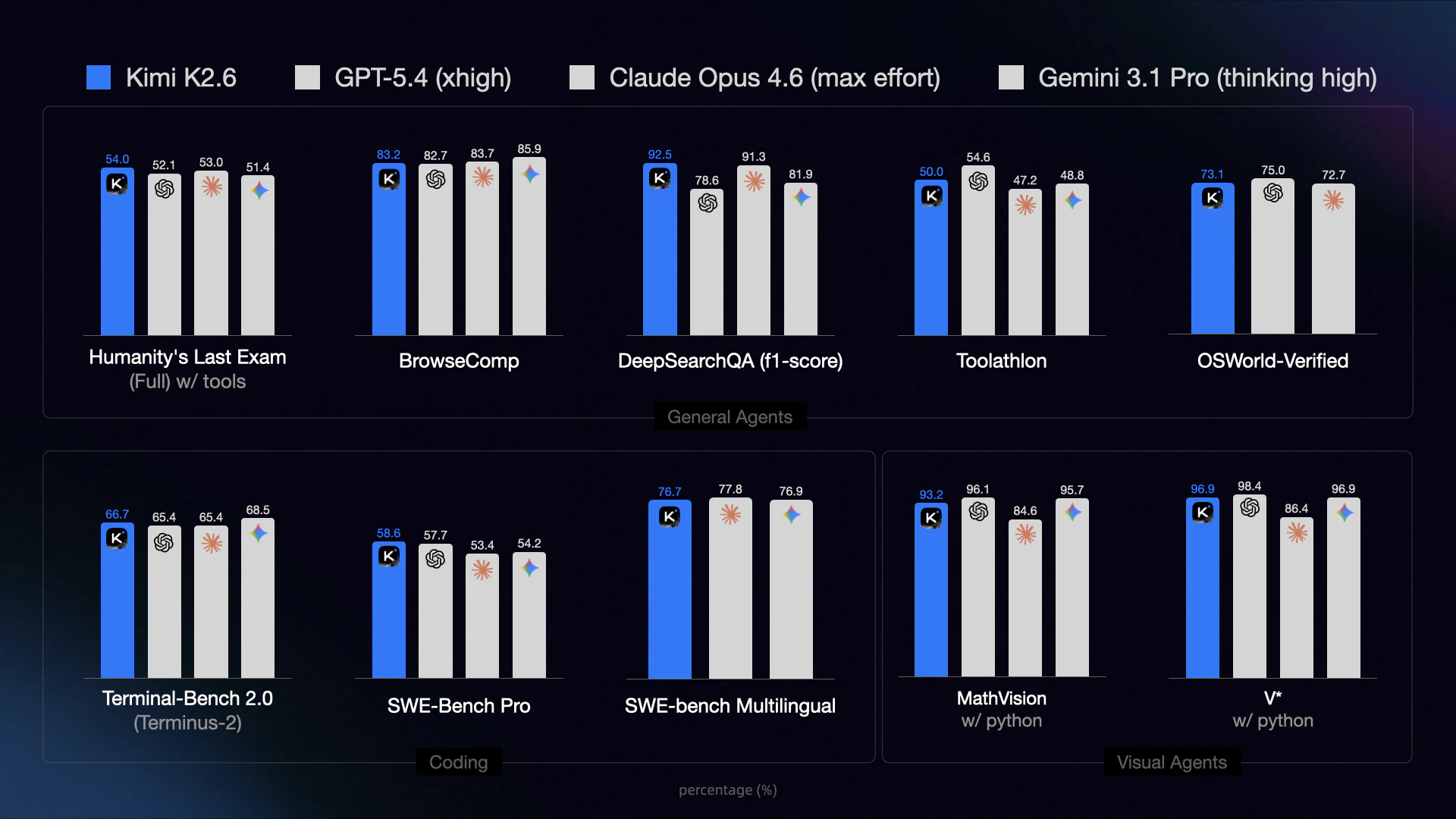
长程编码能力突破
- Kimi K2.6 作为国内领先的 Coding 模型,在长程代码任务中的表现取得了突破,面对不同编程语言(如 Rust、Go、Python)和任务场景(如前端、运维、性能优化)均具备更可靠的泛化能力。
超长上下文支持
kimi-k2.7-code、kimi-k2.6模型均提供 256K 上下文窗口
长思考能力
- Kimi K2.6 仍然具备超强的思考能力,支持多步工具调用和推理,擅长解决复杂问题,如复杂的逻辑推理、数学问题、代码编写等。
立即开始
- 立即体验 :在开发工作台,快速通过交互式操作测试模型在业务场景上的效果
- 申请 API Key :立即通过 API 调用测试
调用示例
以下是完整的调用示例,帮助您快速上手 Kimi K2.6 模型。安装 OpenAI SDK
Kimi API 完全兼容 OpenAI 的 API 格式,你可以通过如下方式来安装 OpenAI SDK:验证安装结果
图片理解代码示例
视频理解代码示例
多模态工具能力示例
Kimi K2.6 模型综合了多种能力。以下是一个展示 K2.6 视觉理解+工具调用能力的示例。 首先将这个示例视频下载到本地,比如/path/to/test_video.mp4
然后运行以下代码
最佳实践
支持的格式
图片支持 png、jpeg、webp、gif;视频支持 mp4、mpeg、mov、avi、x-flv、mpg、webm、wmv、3gpp 格式。Tokens 计算及费用
图片与视频进行动态token计算,可以通过 计算token接口 ,在开始理解前获取包含图片或视频的请求的token消耗。 一般说来,图片分辨率越高,消耗的token越多;视频由若干张关键帧组成,关键帧的数量越多,分辨率越高,则token消耗越多。 Vision 模型根据模型推理的总 Tokens 计费,详情请查看: 关于 token 价格,详见 模型推理价格说明 。分辨率说明
我们推荐图片分辨率不超过4k (4096*2160),视频分辨率不超过 1080p (1920*1080),再高的分辨率只会增加处理时间,也不会对模型理解的效果有提升。上传文件还是base64
由于我们对请求体的整体大小有限制,所以对于非常大的视频,必须使用上传文件的方式使用视觉理解功能。对于需要多次引用的图片或视频,我们推荐使用文件上传的方式使用视觉理解功能。关于上传文件的限制,请参阅 文件上传 文档。 图片数量限制:Vision 模型没有图片数量限制,但请确保请求的 Body 大小不超过 100M URL 格式的图片:不支持,目前仅支持使用 base64 编码的图片内容参数变动说明
在 chat 文档中有一系列参数,但对于 K2.6 系列模型,其行为会有所不同。 我们建议用户不要手动设置这些字段,而是使用默认值 参数变动列举如下Tool Use 参数兼容性
当使用工具时,若thinking设置值为{"type": "enabled"},请注意,为了确保模型的性能,会有以下约束:
- 为了避免思考内容与指定的
tool_choice冲突,tool_choice只能使用”auto”和”none”(默认值为”auto”),取任何其他值将会报错; - 在多步工具调用过程中,建议将本轮会话中工具调用时 assistant message 里的
reasoning_content保留在上下文当中;不回传不会报错,但可能影响推理连贯性和工具调用效果; - 官方内置的 builtin 的联网搜索
$web_search工具暂时与 Kimi K2.6 思考模式不兼容,可以选择先关闭思考模式后使用联网搜索工具$web_search。
K2.6 禁用思考能力示例
对于kimi-k2.6 模型,提供禁用思考能力的选项,需要在请求体中指定 "thinking": {"type": "disabled"}:
- curl
- python
模型价格
关于 token 价格,详见 产品定价 。了解更多
- 使用 Kimi 模型进行基准测试,请参考这篇 基准测试最佳实践
- Kimi K2.6 的最详细的 API 使用示例请见: 视觉输入
- 查看如何在 Claude Code 中使用 Kimi 模型
- 在这里查看如何配置使用 思考模式